
How to Build Your Brand Online from Scratch in 2026
A step-by-step framework for business owners who have zero online presence today and want one that actually earns trust.
Somewhere between "I need a logo" and "I need Instagram followers," most small business owners lose the plot entirely. They end up with a random logo made in ten minutes, a website that doesn't match their Instagram colors, and a brand that looks different everywhere a customer finds them. If that sounds familiar, you're not building a brand you're just scattering assets, and it's costing you more than you think. Before diving into design, it helps to understand what a real website foundation and a proper digital marketing structure actually look like, because branding sits on top of both.
Here's the part that should genuinely worry you: research shows consistent brand presentation across platforms can lift revenue by 23-33%, while inconsistent brands often need close to double the ad spend just to get the same growth. In other words, this isn't a design exercise it's a cost problem you're either solving or paying for every month.
Table of Contents
- What "Brand" Actually Means (It's Not Just a Logo)
- Step 1: Get Brutally Clear on Who You're Actually Talking To
- Step 2: Build Your Visual Identity - Once, Properly
- Step 3: Your Website Is Your Brand's Home Base
- Step 4: Show Up Consistently Where Your Customers Already Are
- Step 5: Let Your Website Convert, Not Just Look Good
- Step 6: Make Sure People Can Actually Find Your Brand
- What This Looks Like for a Business Starting From Zero in Rohtak
What "Brand" Actually Means (It's Not Just a Logo)
A brand is the sum of every impression a customer forms about your business your name, your logo, your tone of voice, your website, how fast you reply on WhatsApp, even the colors on your delivery packaging. A logo is just one visible piece of that. Research shows it takes just seven seconds for someone to form an opinion about a brand, and 5-7 repeated interactions before they actually remember it. That means your brand isn't built in one design session it's built through consistent, repeated exposure across every place a customer encounters you.
This is exactly why website design and branding can't be treated as separate projects. A beautifully designed logo sitting on a slow, inconsistent website undermines the very trust it's supposed to build.
Step 1: Get Brutally Clear on Who You're Actually Talking To
Before a single design decision, answer this honestly: who is your ideal customer, and what do they actually care about? A brand built to appeal to "everyone" ends up connecting with no one. A coaching institute targeting anxious parents needs a completely different tone and visual identity than a gym targeting young professionals same city, same broad category, entirely different brand.
Write down three things: your customer's biggest hesitation before buying, the language they actually use (not marketing jargon), and the one outcome they care about most. Every design and content decision after this should trace back to these three answers.
This step feels slow compared to jumping straight into logo design, but skipping it is exactly why so many small business brands feel generic. A clinic serving anxious first-time patients and a clinic serving athletes recovering from injury both need websites and visuals but the tone, the imagery, and even the color choices should look nothing alike if they're actually built around who they're trying to reach.
Step 2: Build Your Visual Identity - Once, Properly
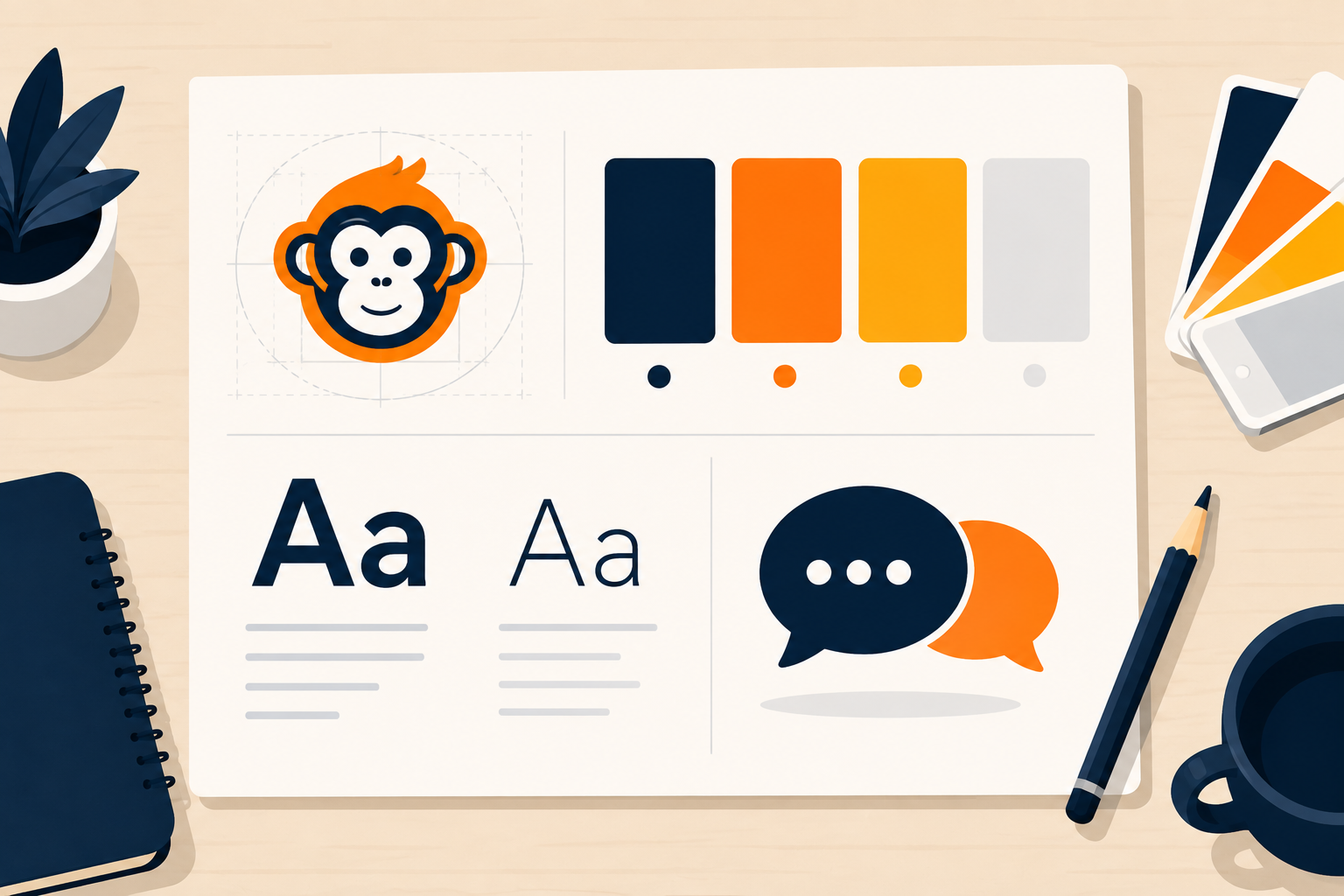
This is the stage most businesses rush, and it shows. Your visual identity needs exactly four things, decided once and used everywhere:
- A logo that works in one color, on a small WhatsApp profile photo, and on a large signboard not just a pretty file that only looks good full-size. Our thoughts on what makes a logo actually work for a small business covers this in more detail.
- 2-3 brand colors used consistently everywhere website, social posts, packaging, signage. A distinct color scheme alone can boost brand recognition by up to 80%.
- 1-2 fonts for headings and body text not five different fonts across five different platforms.
- A tone of voice are you formal and trustworthy, or friendly and approachable? Decide once, and use it in every caption, every reply, every page of copy.
You don't need this to be expensive or elaborate. You need it to be consistent a simple 2-3 page brand guide is genuinely enough for a small business, and it saves every future designer, freelancer, or team member from guessing.
Step 3: Your Website Is Your Brand's Home Base
Social media platforms are rented land algorithms change, accounts get flagged, trends shift. Your website is the one place your brand fully belongs to you. This matters more than most business owners realize: having an active Instagram page isn't a substitute for a website, especially when a customer wants to verify you're a real, credible business before they call or visit.
Your website needs to do three things within the first five seconds a visitor lands on it: explain what you do, show who it's for, and make the next step (call, WhatsApp, form) obvious. Every piece of your visual identity from Step 2 - logo, colors, fonts, tone - needs to show up here first, because this is the page that gets shared, linked, and Googled the most.
Step 4: Show Up Consistently Where Your Customers Already Are
Once your identity and website are solid, extend the same brand not a different one to social media and your Google Business Profile. Posts using consistent branding get roughly 23% more engagement on platforms like Instagram and LinkedIn compared to inconsistent posting. Beyond social, your Google Business Profile is often the very first brand touchpoint a local customer has with you before your website, before your social media so it needs the same logo, the same tone, and accurate, updated information.
A simple monthly rhythm works better than sporadic bursts: a couple of posts a week using your brand colors and voice, replies that sound like your brand (not generic customer service copy-paste), and photos that look like they belong to the same business, not five different ones. If you're managing this yourself and it's taking more time than it's worth, this is exactly the kind of ongoing work our social media management covers for clients who'd rather focus on running their business.
Step 5: Let Your Website Convert, Not Just Look Good
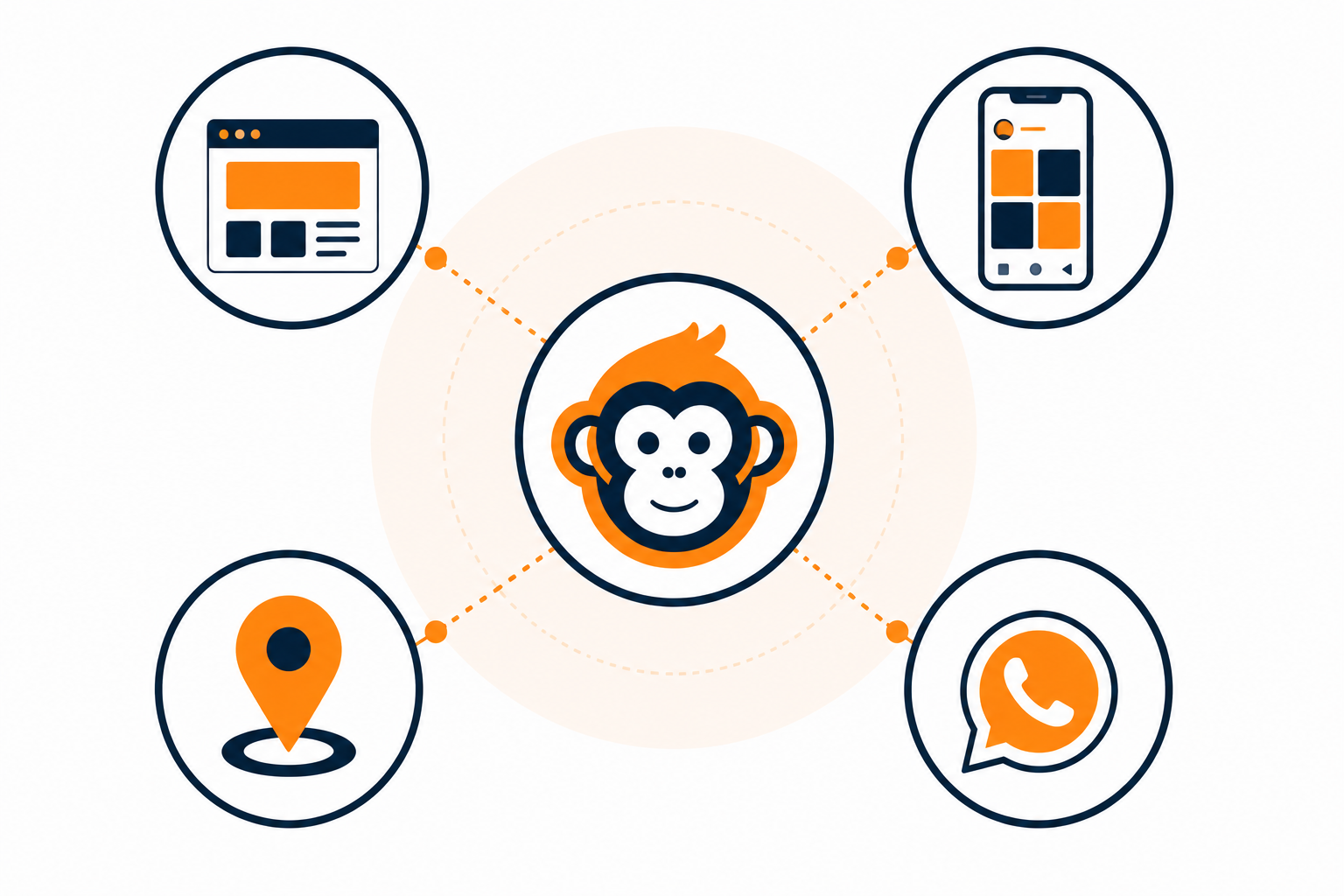
A beautiful brand that doesn't turn visitors into customers is decoration, not strategy. Once your visual identity is live across your website and profiles, the next job is making sure it actually turns visitors into customers clear calls to action, fast load times, and a WhatsApp or call button that's never more than one scroll away.
This is where a lot of DIY branding efforts quietly fail. The logo looks sharp, the Instagram grid is aesthetic, but there's no clear next step for someone who's genuinely interested. Brand builds trust; conversion turns that trust into an actual customer you need both working together, not one without the other.
A useful way to audit this yourself: open your own website on your phone right now and time how long it takes you to find a way to contact the business. If it takes more than a few seconds even for you someone who already knows the business inside out a first time visitor is almost certainly leaving before they find it.
Worth remembering: businesses with strong, consistent brands can often charge a price premium of up to 20% over weaker competitors offering the same product or service, simply because customers perceive them as more reliable and less risky to buy from.
Step 6: Make Sure People Can Actually Find Your Brand
A strong brand that nobody can find online isn't building you any business. Once your identity, website, and social presence are consistent, the next layer is visibility making sure your brand shows up when someone in your city searches for what you offer. This is where SEO and paid ads come in not to build your brand, but to put an already-solid brand in front of the right people at the right moment. A brand without visibility is a well-designed secret; visibility without a solid brand behind it just wastes ad spend on visitors who don't trust what they land on.
This sequencing matters more than people realize: spending on ads before your identity and website are consistent means you're paying to send traffic to a business that doesn't yet look trustworthy enough to convert. Get the brand foundation right first, then invest in getting found.
Think of it as building in the right order: identity gives people a reason to trust you, your website gives them a place to act on that trust, and visibility simply makes sure more of the right people see it. Reverse that order chasing traffic before the brand behind it is ready and you end up paying to expose a weak first impression to more people, which usually does more harm than good.
What This Looks Like for a Business Starting From Zero in Rohtak
We've built brands from literally nothing for coaching institutes, clinics, and retail businesses in Rohtak and Bahadurgarh no existing logo, no website, sometimes not even a clear business name yet. If you're based near our Bahadurgarh office or our Rohtak location, the pattern that works every time is the same: lock down identity first (logo, colors, tone), build a proper website second, then extend that identity to social media and Google Business Profile third. Skipping straight to social media without the first two steps is why so many local businesses have an active Instagram page but no real, trustworthy brand behind it.
Before we go into building a website, we always sit down with the business owner first not to sell a package, but to understand what the business actually stands for. That's the difference between a brand that looks premium and one that just looks expensive.
Enjoying our content? Make us a preferred source on Google.
Add us as Preferred Source