What is Performance Marketing and Is It Right for Your Business?
A plain English breakdown of the term every agency throws around and how to know if it actually fits your business.
If you've ever asked a marketing agency what they do and gotten the answer "performance marketing" without any real explanation, you're not alone. It sounds impressive, gets thrown around in every pitch deck, and yet most business owners still can't tell you what it actually means versus regular digital marketing or plain old running ads.
Here's the short version before we go deeper: performance marketing isn't a single channel it's a way of spending your marketing budget where you only pay for actual results, not just visibility. Once that clicks, the rest of this decision becomes a lot easier.
Table of Contents
- Performance Marketing, Defined Simply
- The Channels That Fall Under Performance Marketing
- The Metrics That Actually Matter
- Why Businesses Are Shifting Toward This Model
- Is It Right for Your Business? A Simple Test
- What Performance Marketing Is Not
- How This Plays Out for a Small Business in Rohtak or Bahadurgarh
- What "Good ROI" Actually Looks Like in Numbers
- A Quick Checklist Before You Start
- How Smart Monki Approaches Performance Marketing
Performance Marketing, Defined Simply
Performance marketing is a results driven approach where you pay only when a specific, measurable action happens a click, a lead, a sign-up, or a sale. That's the core difference from traditional advertising, where you pay for exposure (a billboard, a newspaper ad, a TV spot) regardless of whether anyone actually acts on it.
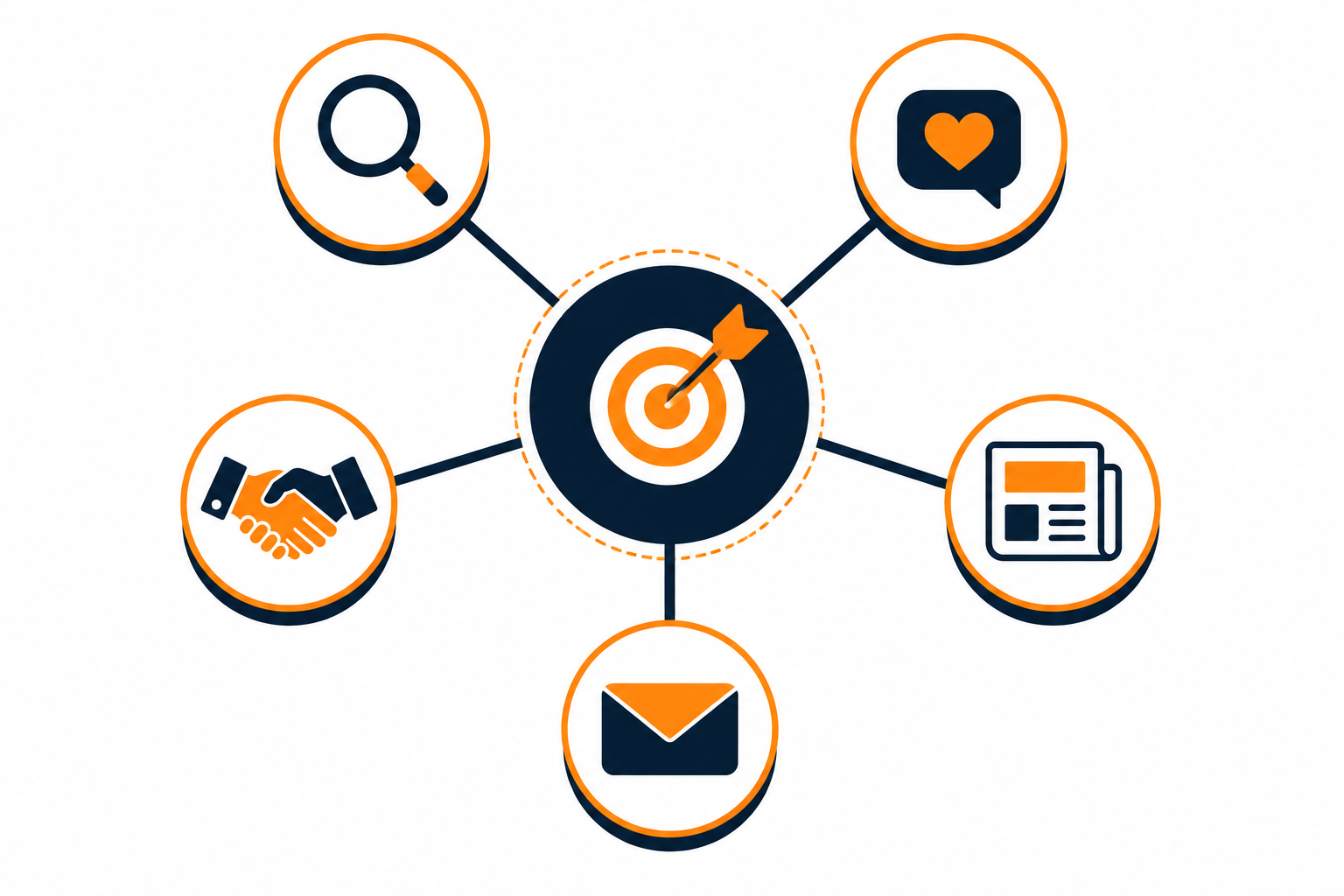
It's important to understand this is a category, not one single tactic. Paid search (like Google Ads) is one channel under this umbrella. So is paid social, affiliate marketing, native advertising, email campaigns, and increasingly, retail media and influencer partnerships. If you've read our piece on running Google Ads that actually work, you've already seen one slice of performance marketing in action but it's only one slice.
The Channels That Fall Under Performance Marketing
| Channel | Best For | Typical Metric |
| Paid Search (Google Ads) | High-intent buyers actively searching | Cost per click / lead |
| Paid Social (Meta, Instagram, LinkedIn) | Awareness + targeted lead generation | Cost per lead / engagement |
| Affiliate Marketing | Extending reach through partners | Cost per sale |
| Native & Programmatic Ads | Broad reach without feeling like an ad | Cost per click / impression |
| Email & WhatsApp Campaigns | Retention and repeat customers | Cost per conversion |
Each of these can be tracked, measured, and optimized which is exactly the point. If a channel can't tell you what a lead or sale actually cost you, it doesn't really belong in a performance marketing strategy.
The Metrics That Actually Matter
Ask any performance marketer to explain a campaign and you'll hear a handful of acronyms CPC, CPL, CPA, ROAS. Here's what they mean in plain terms, because understanding these is what separates a business owner who can hold an agency accountable from one who just trusts whatever number gets reported:
- CPC (Cost Per Click): what you pay each time someone clicks your ad useful for comparing channel efficiency, but not the full picture on its own.
- CPL (Cost Per Lead): what it costs you to get one inquiry, form fill, or WhatsApp message usually the number that matters most for service businesses.
- CPA (Cost Per Acquisition): what it costs to actually convert someone into a paying customer, not just a lead.
- ROAS (Return on Ad Spend): how much revenue you generate for every rupee spent the most direct measure of whether a campaign is actually profitable.
If your agency can't tell you these four numbers for your current campaigns, that's usually a sign the "performance" part of performance marketing isn't actually being tracked.
Why Businesses Are Shifting Toward This Model
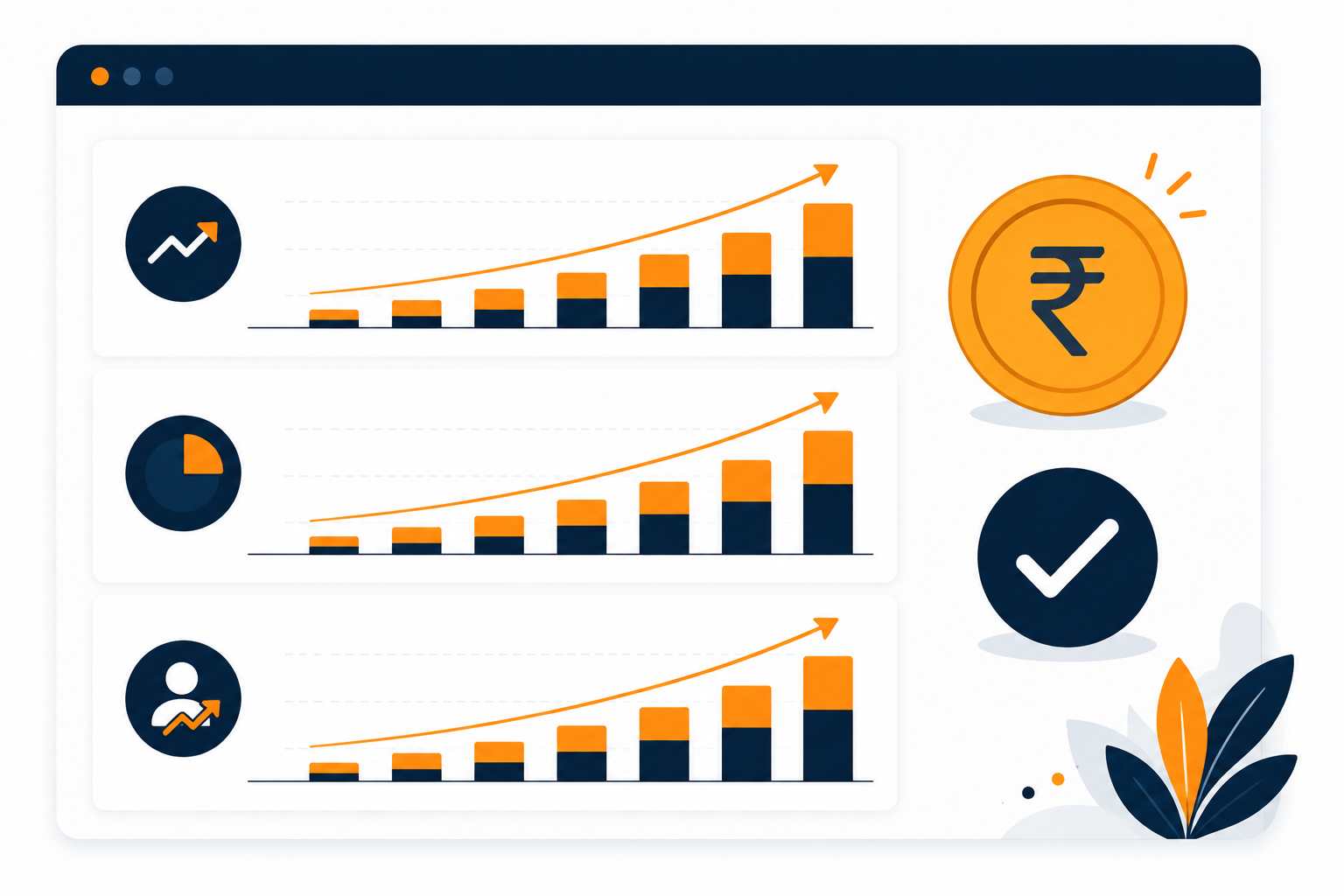
The appeal is simple math: performance marketing ties spend directly to outcomes. Industry benchmarks for 2026 show performance-based campaigns can return roughly ₹15 for every ₹1 spent when channels, targeting, and tracking are set up correctly a number that's hard to compete with when you're comparing it to money spent on a hoarding or a newspaper ad that nobody can measure. That accountability is exactly why more small and mid-sized businesses in India are moving budget away from "spray and pray" advertising and into models where every rupee is traceable.
There's also a practical shift happening behind the scenes: with tighter privacy rules and the phase-out of third-party tracking, businesses that rely on their own first-party data website visitors, WhatsApp inquiries, past customers are seeing stronger, more reliable results from performance campaigns than those still depending on broad, untargeted reach.
Common misconception: performance marketing is not just "running Facebook and Google ads." A business that only runs paid ads and ignores affiliate partnerships, retargeting, or email nurturing is using one channel of performance marketing, not the full model. This is where most small businesses leave real ROI on the table.
Is It Right for Your Business? A Simple Test
Performance marketing works best when three things are true for your business:
- You have a measurable action to optimize for. A purchase, a form fill, a WhatsApp inquiry, a booking. If you can't define what a "conversion" looks like, performance marketing has nothing to optimize.
- Your website or landing page can actually convert traffic. Sending paid traffic to a slow, confusing, or outdated site wastes budget regardless of how good your targeting is this is why we always check website performance before recommending ad spend.
- You can commit to tracking and testing. Performance marketing rewards businesses that review data monthly and adjust not ones that set a campaign live and forget about it for six months.
If those three boxes tick for your business a coaching institute tracking admissions, a clinic tracking appointment bookings, a retail store tracking online orders performance marketing is very likely worth the investment. Our guide on generating leads from Google walks through exactly what a measurable action and a converting landing page look like together.
On the other hand, if your business sells something with a very long consideration cycle a big-ticket purchase people research for months before buying performance marketing still works, but you'll need a longer measurement window and a strategy for nurturing leads (email, retargeting, WhatsApp follow-ups) rather than expecting a single ad click to turn into a sale overnight.
What Performance Marketing Is Not
It's worth being direct here, because a lot of agencies blur this line for their own convenience:
- It's not the same as SEO. SEO builds long-term organic visibility with no per-click cost; performance marketing is paid, and stops the moment budget stops.
- It's not just "boosting a post." A ₹500 Instagram boost with no landing page, no tracking, and no defined goal isn't performance marketing it's just spending money and hoping.
- It's not a replacement for branding. A strong, recognizable brand actually makes performance campaigns work better better click-through rates, better trust, slower ad fatigue. The two work together, not against each other.
If you've read our earlier comparison on generating leads through digital marketing, you'll notice performance marketing is really the measurable engine sitting inside a much bigger digital marketing strategy not a separate universe.
How This Plays Out for a Small Business in Rohtak or Bahadurgarh
Most local businesses we work with start with a single channel usually Google Ads because it's the most familiar. But performance marketing done properly usually means layering channels once the first one is stable: search ads to capture people already looking, paid social to build awareness in your local Bahadurgarh or Rohtak market, and retargeting to bring back visitors who didn't convert the first time.
The businesses that see the strongest ROI aren't the ones spending the most they're the ones with clean tracking, a converting landing page, and a plan to test and adjust monthly. That's a very different approach from just handing an agency a budget and hoping for the best, which is unfortunately still how a lot of small businesses in Haryana approach digital ads today.
What "Good ROI" Actually Looks Like in Numbers
To make this less abstract: if a coaching institute in Rohtak spends ₹30,000 a month on a mix of search and social ads and generates 60 qualified inquiries, that's a cost per lead of ₹500. If even 15% of those inquiries convert into admissions worth ₹25,000 each, that single month of spend has already returned far more than it cost and that's before factoring in retargeting bringing back the 85% who didn't convert immediately. This is exactly why "performance" is the right word for this category every rupee has a traceable outcome attached to it, unlike a newspaper ad or a hoarding where you're guessing at impact.
The same logic applies to a retail store, a clinic, or a real estate business the channels change, but the discipline of tying spend to a measurable action stays identical.
A Quick Checklist Before You Start
- Define one clear conversion goal (lead, sale, booking) before spending a single rupee
- Make sure your website or landing page loads fast and explains your offer in five seconds see our thoughts on how a website actually generates leads
- Set up basic tracking (Google Analytics, Meta Pixel, or WhatsApp click tracking) before launch, not after
- Start with one or two channels don't spread a small budget across five platforms at once
- Review numbers monthly and be willing to shift budget toward whatever channel is actually converting, using our take on ranking and visibility strategy as a companion piece for the organic side
How Smart Monki Approaches Performance Marketing
We don't hand clients a generic ad package and call it performance marketing. Every campaign starts with defining what "performance" actually means for that specific business a lead form, a WhatsApp message, a completed booking and then building the tracking to measure it properly before a single rupee is spent on ads.
From our offices in Rohtak and Bahadurgarh, we've built performance campaigns across social media and search for coaching institutes, clinics, and retail businesses across Haryana always layering channels gradually rather than throwing budget at everything at once. You can read more about how we think about client work on our approach to digital marketing if you want the fuller picture.
Enjoying our content? Make us a preferred source on Google.
Add us as Preferred Source